Showing posts with label On Mediaeval Soft Drinks. Show all posts

Tuesday, May 1, 2018

Root Beer - with some history

As a medieval reenactor, and brewer, I was unsurprisingly asked – begged! – by my kid to help him make root beer. We both quite like the taste of root beer, and the idea of going on a root-and-herb scavenger hunt in the back swamp spoke to both of us! The cunning plan was to have the kid enter his root beer in a brewing competition hosted by a medieval reenacting Society (SCA.org) and thus he had to know at least some of its early history. But – how period is root beer? The two ingredients most often mentioned to make root beer are sarsaparilla and sassafras, so let’s first take a look at those.

sarsaparillaA Flora of the State of New York by John Torrey Vol

Sarsaparilla (Smilax ornata; top) was introduced to Europe in the 16th century by the Spaniards, first from Mexico and later from Honduras. Mexico, Central America and many parts of northern South America abound in various species of sarsaparilla, valued by the natives for their, more or less, medicinal qualities. The natives value its nourishing and healing qualities so much they would drive their cattle to areas where it grew in abundance in order to feed on the plants and receive its benefits.
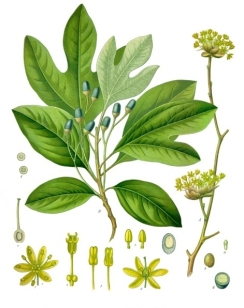
Sassafras_albidum_-_Köhler–s_Medizinal-Pflanzen-260 

Sassafras (Sassafras albidum; top) was a well-known plant to the natives of the southwestern United States way before the Europeans came around. It had many purposes, including cooking (to flavor bear fat, to cure meat) and medicinal. The European interest in sassafras brought Europeans into closer contact with the Native Americans during the early years of settlement in 16th and 17th century Florida, Virginia and parts of the Northeast. Early European settlers enjoyed the aromatic scent of sassafras – according to legend, Christopher Columbus finally found land because he could smell the sassafras! As early as the 1560s, French visitors to North America discovered the medicinal qualities of sassafras, as well as the Spanish who arrived in Florida.

Sassafras trees were reported as plentiful at the arrival of the English on the coast of Northeast. Sassafras bark was sold in England and in continental Europe where it was made into a dark beverage called ‘saloop’ – touted to have medicinal qualities and used as a medicinal cure for a variety of ailments. This refreshing beverage was sold in place of tea and coffee, which were much more expensive, and was served in a similar way with milk and sugar. Sir Francis Drake was one of the earliest to bring sassafras to England in 1586, and Sir Walter Raleigh was the first to commercially export sassafras in 1602. Since the bark was the most commercially valued part of the sassafras plant due to large concentrations of the aromatic safrole oil, the trees would be stripped of their bark  – which kills the tree. This meant that as significant amounts of sassafras bark were harvested, supplies quickly diminished and sassafras became more difficult to find. For example, while one of the first shipments of sassafras in 1602 weighed as much as a ton, by 1626, the English colonists failed to meet their 30-pound quota. Unfortunately, over-harvesting is not a modern thing either.

Martin Pring; in his own words (1603):
“In all these places we found no people, but signes of fires where they had beene. Howbeit we beheld very goodly Groves and Woods replenished with tall Okes, Beeches, Pine-trees, Firre-trees, Hasels, Wich-hasels and Maples. We saw here also sundry sorts of Beasts, as Stags, Deere, Beares, Wolves, Foxes, Lusernes, and Dogges with sharpe noses. But meeting with no Sassafras, we left these places with all the foresaid Ilands, shaping our course for Savage Rocke discovered the yeere before by Captaine Gosnold, where going upon the Mayne we found people, with whom we had no long conversation, because here also we could find no Sassafras. De-parting hence 3 we bare into that great Gulfe which Captaine Gosnold over-shot the yeere before, coasting and finding people on the North side thereof. […] Bancroft, following Belknap, identifies Whitson’s Bay with the harbor of Edgartown, Martha’s Vineyard, which is in the latitude of 41° 25g. […]and finding a pleasant Hill thereunto adjoyning, we called it Mount Aldworth, for Master Robert Aldworths sake a chiefe furtherer of the Voyage, as well with his Purse as with his travell. Here we had sufficient quantitie of Sassafras.”

Is root beer period plausible?

What this rather long introduction means is that both main root beer flavors – sarsaparilla and sassafras – were known in 16th century Europe, and at least sassafras was used in a drinkable medicinal concoction in Europe. Unfortunately, it was not (yet) fermented… The tradition of brewing, or fermenting, root beer is thought to have evolved out of other European small beer traditions that produced fermented drinks with very low alcohol content. These were thought to be healthier to drink than possibly tainted local sources of drinking water, and enhanced by the medicinal and nutritional qualities of the ingredients used. For instance, the 14th century recipe Tizanne Doulce (like a tisane, or infusion) uses barley, licorice root and crystal sugar to make a root beer-like beverage.

Le Ménagier de Paris, 1393
TIZANNE DOULCE. Take water and boil it, then for each sester [the sester of 8 pints] of water put in a bowl heaped with barley, and it matters not if it be hulls and all, and two parisis [2 1/2d.] worth of liquorice, item, figs, and let it be boiled till the barley bursts; then let it be strained through two or three pieces of linen, and in each goblet put great plenty of crystallised sugar. Then the barley is good to give to poultry to eat to fatten them. Note that the good liquorice is the newest and it is a fresh greenish colour, and the old is more faded and dead and is dry.


Roots, bark, resin, fruits & flowers

We chose these specific roots, barks and leaves as these either grew in the back yard (our property adjoins a New York State Protected Wetland, so plenty of bio-diversity) or we already had in the kitchen cupboards. Even though I met someone via Facebook who lived in the South and had a sassafras tree in his backyard and was willing to ship rootstock, unfortunately, facebook ate the conversation and he was never heard from again… so this time around, at least, no period-correct Southern grown sassafras. We substituted with black birch, as that has a root beer typical wintergreen-like flavor, and spicebush (bottom).
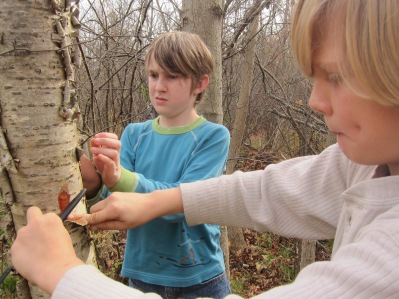
Spicebush or Lindera Benzoin.  Wm PC Barton. 

We went on a scavenger hunt and gathered as much as we could from the back yard and surrounding property. Ironically, it is in our modern middle Ages not possible to buy fresh, green licorice; therefor we’ll have to do with the ‘dead’ dry stuff. The kid made name cards to label each baggie of ingredients.

IMG_3799
Backyard scavenger hunt with friend.

Our recipe

  • 0.6 oz black birch bark
  • 0.6 oz spicebush bark
  • 0.3 oz licorice root
  • 0.3 oz dandelion root
  • 0.3 oz birch bark
  • 0.3 oz black cherry bark (included resin)
  • 0.3 oz juniper berries
  • 1 tbs hops flowers
  • 1 tbs ginger root
  • 1 cinnamon stick
  • 2 ½ quart water
  • 1 cup sugar (brown sugar)
  • yeast starter (ale yeast, reclaimed from a perry).

IMG_3839 

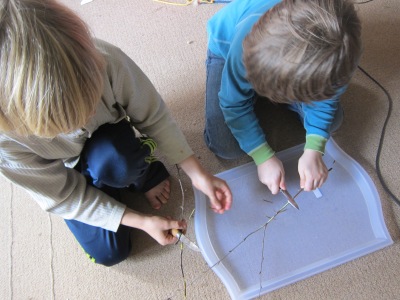
Then it was time to brew! The kids scraped the bark off the wintergreen and spicebush twigs. He chopped the dandelion root and grated the ginger root. He broke the birch bark, the cherry bark and the dried licorice root into little pieces. He picked the juniper berries from between the greens. And crushed the cinnamon stick. Mom got homegrown hops from the freezer (he’s not touching the hops supply). He measured everything on the scale, and added it all to the big sauce pot. He measured and added the 2 ½ quarts of water. Turned on the stove, and brought it up to a boil. When boiling, it was turned down to a simmer, to simmer for 20 minutes. When done, mom put the pot in the sink in cold water to cool. The infusion was left to sit overnight.

IMG_3900

The next day, he poured some reclaimed ale yeast into a 1 gallon carboy, and poured the infusion – through a filter – into the same carboy. He added 1 cup of sugar, for the yeast. He then shook the carboy well to dissolve all the sugar, and carefully poured the infusion into his recycled fliptop soda bottles. They were left in a warm place to start fermentation. They will stay out for a few days, until carbonation is visible, and then be refrigerated to stop/slow down the yeast.

A table showing the different botanicals that can be used in root-beer (X marks the ones we used):


Roots and herbs
Spices

Sassafras albidum – roots, leaves, bark
Pimenta dioica – allspice

Smilax ornata –sarsaparilla X Juniperus communis – juniper berries

Smilax glyciphylla – sweet sarsaparilla
Trigonella foenum-graecum – fenugreek

Piper auritum – root beer plant
Myroxylon balsamum – Tolu balsam
X Glycyrrhiza glabra – liquorice (root)
Abies balsamea – balsam fir

Aralia nudicaulis – wild sarsaparilla
Myristica fragrans – nutmeg

Gaultheria procumbens – wintergreen (leaves and berries) X Cinnamomum verum – cinnamon (bark)
X Betula lenta – sweet birch (sap/syraup/resin)
Cinnamomum aromaticum – cassia (bark)
X Betula nigra – black birch (sap/syrup/resin)
Syzygium aromaticum – clove
X Prunus serotina – black cherry
Foeniculum vulgare – fennel (seed)

Picea rubens – red spruce X Zingiber officinale – ginger (stem/rhizome)

Picea mariana – black spruce
Illicium verum – star anise

Picea sitchensis – Sitka spruce
Pimpinella anisum – anise

Arctium lappa – burdock (root) X Humulus lupulus – hops (bells/flowers)
X Taraxacum officinale – dandelion (root)
Mentha species – mint


Other ingredients


Hordeum vulgare – barley (malted)


Hypericum perforatum – St. John's wort

X Sugar


Molasses

X Yeast


Note: black birch and the evergreen Gaultheria are both sources for the scent wintergreen.
Note: while in medieval European brewing Juniperus communis was used, as we have several mature trees of Juniperus virginiana we used that instead. Like its European counterpart, Virginian juniper is also used to flavor gin.


Medieval European plausibility of our chosen ingredients: [yes / no]


black birch bark wh eastern North America no
spicebush bark wh eastern North America no
dandelion root wh native to Eurasia and North America yes
birch bark wh native to Eurasia and North America yes
black cherry bark wh eastern North America, Central America no
juniper berries hg native to Eurasia and North America yes
hops flowers hg introduced to northern Europe in the 9th century yes
licorice root cs native to southern Europe and parts of Asia yes
ginger root cs exported to EU via India in the first century AD yes
cinnamon stick cs exported to EU via Africa (Egypt) from Sri Lanka yes

Legenda – wh: wild harvested; hg: home grown; cs: commercially sourced


Observations

  • this is an excellent youth-adult project!
  • neither of us liked the licorice after-taste.
  • next time we intend to add burdock, and maybe some mint, or anise – the possibilities are endless!
  • only add a little bit of lees. There is plenty of yeast in even a little bit to start fermentation.
  • if using commercial dry (bread) yeast, a pinch to each bottle is enough.
  • as soon as vigorous carbonation is visible on the outside of the bottles, put them in the fridge.
  • just in case, have a large container ready when opening the flip-top to catch any overly-carbonated blow-out.
  • fermented root beer will go alcoholic eventually – keep an eye on the brew so the kids don’t get too frisky.
  • alcoholic root beer tastes quite good!

And as Sir Kenelme Digby so aptly advised, in his slightly post-period brewing cornucopia:
“You may use what Herbs or Roots you please, either for their tast or vertue…”


Sources

Saturday, July 8, 2017

Dutch oxymel recipes

Capitel 12; folio 647, p.668

Oxycraton. 76.S.
Dese na-volghende dinghen Behouden by de Medicyns ende oock by d'Aptekers haren grieckschen name / want Oxos, dat is Azijn / daer nae letten sy wat daer by / d'welck met den voorte. Azijn vermenghelt wordt / ghelijck als met dit Oxycraton, daer Wijn / Water / ende Azijn t’samen vermengt worden / dwelck by de Latijnisten Posca wordt ghenaemt. Waer toe t'selfde nu ghebruyckt wordt / dat meuchdy hier ende daer uyt desen Boeck verstaen.

The following things keep within medicine and the apothecary their Greek name, because Oxos, that is vinegar, and after that names what is added to the vinegar, similar to oxycraton, which is mixed wine, water and vinegar, and which by the Latinists is called Posca. Where to this same is used, that you may understand from this book.

Oxymel Simplex. 77.S.
Dit Oxymel wordt int eertse Deel / int 2.Capit.6. beschreven / het wordt seer dickmaels gebruyckt / ende tot veel dinghen ghepresen.

Oxymel Simplex.
This oxymel is described in the first part of 2 Chapter 6. It is often used and for many things praised.

Oxymel Compositum. 78.S.
Dit wort alsoo daeromme ghenaemt / om dattet van veel diversche dingen gemaect wort / het welche oock int eerste Deel / int 2.Capittel beschreven staet. [cap.2.6.S. p.35]

Oxymel Compositum.
This also therefor is named, because it is made of diverse things, which is also described in the first part, in Chapter 2.6.S.

Oxymel Scyllium, 79.S.
Dit wort oock op de selve plaetse bescheven / ende dickmaels ghebruyckt.

Oxymel Scyllium.
This is described in the same place, and often used.

Oxyrrhodinum, 80.S.
Het is een ander menghelinghe / als de voor-gaende / het wort veel ghebruyckt teghens de pyne des Hoofts / van buyten op gheleydt / hier af zijnder tweederley ghelyck als hier voren int tweede Deel gheleert is.

Oxyrrhodinum.
This is a different mix, then the previous. It is often used against headache imposed from outside, from here are two similars as before is taught in the second part.

Oxysacchara, 81.S.
Dese Compositije ende hare cracht is int eerte Deel / int 8. Cap.2.S. bescheven.

Oxysacchara.
This composition and her strength is in the first part, in 8. Chapter 2.s. described.

Capt.2. fol.35 p.56
Diversche Oxymel. $.6.
Eerstelijck / willen wy beginnen van tghene datmen op d'Apteke Oxymel simpl. noemt / omdat het alleene van Heunigh ende Azijn ghemaeckt wort: Om nu t'selve te maken/ soo neemt ghesuyverden Heunigh vier Oncen / daer by giet twee Oncen claer waters/ dat selve siedet tesamen / ende schuymt het / tot dat alle het water versoden is / doet daer toe twee Oncen Azyns / laet het tsamen tot een Syrope in sieden: dit verteert alle taeye slijm / ende dic ke humeuren / het opent alle verstoppinge, suyvert de Borst / ende maeckt lichten Adem.

Diverse Oxymel.
First we begin with what the apothecary calls simple oxymel, because it is made with only honey and vinegar. To make your own, take clarified honey four ounces, pour into it two ounces of clear water, cook this together, and scum it, until all the water has evaporated. Add two ounces of vinegar, and let it cook into a syrup: this removes all tough slime, and thick humors, it opens all constipation, purifies the chest, and makes light breath.

Het ander Oxymel, in d'Apteke Compositum of Diureticum ghenaemt / maeckt men op dese maniere: Neemt Venckel-wortel / ende Joffroumerck-wortel / van elcks twee Oncen /  Zaedt van Peterselie / van Rusken / van Sperghen / van Joffrou-mercke / ende van Venckel / van elcks een Once / doer de wortelen het houdt uyt / snijdt ende siedtse in eenen Pot waters / tot datse morwe werden / druckt se daer naer door eenen doeck / ende tot het Sop giet zes Oncen scherpen Azijns / ghesuyverden Heunigh twaelf Oncen / latet tsamen sieden tot een Syrope. Dit is in alles veel stercker / dan dat bovenste / het doet scheyden alle taeye slijm / het drijftse uyt den leden / opent de verstoppinghe der Lever/ der Milten / ende der Nieren / Drijft de urijne / ende het Sweet uyt.

The other oxymel, called Compositum of Diureticum by the apothecary, one makes in this manner: take fennel root, and wild celery [Apium palustre] of each two ounces, seed of parsley, of rushes [Juncaceae], of asparagus [?], of wild celery and fennel, each an ounce. Remove the wood off the roots, cut and cook in a pot water until they are soft. Press through a cloth and unto this cookwater pour six ounces sharp vinegar, clarified honey twelve ounces, and let it simmer into a syrup. This is stronger in everything, than the one [recipe] above, it parts all tough slime and pushes it out, opens constipated liver and spleen and kidneys, drives off urine and sweat.

Het derde Oxymel is van Squillen ghemaeckt / Oxymel Scillinum, oft in d'Apteke Scilliticum ghenaemt / daer toe neemt Azijn van Squillen (als hier voren int 2. Capit.S.1. teghen de coude Pijne des Hoofts beschreven staet) vier Oncen / ghesuyverden Heunigh zes Oncen / ende siedet samen tot een Syrope.

The third oxymel is made from squill [Urginea scilla], called Oxymel Scilliticum at the apothecary. Take thus vinegar of squill (as is mentioned before in 2. Chapter against cold pain of the head) four ounces, clarified honey six ounces and simmer together into a syrup.

 Het vierde / is Oxymel Scillinum Compositum: Men maket alsoo: Neemt Wortels van Joffroumercke / van Venckel / van elcks twee Oncen / wortelen van Peterselie / Rusken / ende van Sperghen / Zaedt van Joffroumercke ende van Venckel / van elckx een Loot / siedet al t'samen in eenen Pot waters / totdat de wortelen morwe werden : tot dit so doet twaelf Oncen goeden Azijn / ghesuyverden homich 18. Oncen / ende siedet voorts tot een Syrope. Beyde zijde seer goet / om het taeye slijm te doen scheyden / de Maghe stercken / ende water te doen lossen / dan het eerse is noch crachtigher in openinghe van alle Verstopt heyt / ende is sonderlijck goet teghen de daghe lycksche / ende vierdaechiche Coortse.

The fourth is Oxymel Scillinum Compositum: One makes also: take roots of wild celery, of fennel, of each two ounces. Roots of parsley, rushes [Juncaceae], and asparagus [?], seed of wild celery and fennel, of each a loot. Cook is all together in a pot water, until the roots are soft: unto this put twelve ounce good vinegar, clarified honey 18 ounces, and simmer it into a syrup.
Both are very good to part tough slime, make the stomach stronger, and to loose water, than the first is much stronger in opening all constipation and is exceptional against daily fever and four-day fever.


From the Medicyn-Boeck, Daer inne alle Gebreken des menschelijken lichaems, mitsgaders de Remedyn deselven, claerlijck aenghewesen wordt. In 't Hooch-duytsch beschreven door Christophorum Wirtsung, Ende in de Nederlantsche tale overgheset door D. Carolum Battum ordinaris Medicijn der Stadt Dordrecht. Tot Amsterdam, By Michiel Colijn Boeck-vercooper opt water, int Eiuysboeck aende Cooren marckt, 1628.

This book was first printed in 1589, but did not seem to include any mead or oxymel recipes. It was reprinted at least 7 times between then and this edition, but as I do not have access to the in between editions, I can not say for sure when the mead & oxymel chapter first was included.

Link to the 1589 edition:
https://books.google.com/books?id=x0eC7luXkykC&dq=secreet%20boek&source=gbs_similarbooks

Link to the 1628 edition:
https://books.google.be/books?id=lu9jAAAAcAAJ&dq=medicyn-boeck&hl=nl&source=gbs_navlinks_s

Ingredient translations:
Joffroumerck:
https://vandenschatderarmen.wordpress.com/planten-en-kruiden/
Rusk:
http://gtb.inl.nl/iWDB/search?actie=article&wdb=WFT&id=84091&lemma=rusk
Sperghen:
http://gtb.inl.nl/iWDB/search?actie=article&wdb=WNT&id=M004508&lemma=asperge
Squill:
http://www.botanical.com/botanical/mgmh/s/squill86.html

Monday, January 16, 2017

Arabian non-alcoholic drinks and syrups made with honey.

While looking for fermented honey drinks, I came across a handful of delicious sounding syrups used to make soft drinks. Keep in mind that while early period syrups were mostly sweetened with honey and fruit sugar extracts, by the time refined sugar made its entrance it quickly took over its place in generic sweetening. I find when looking for recipes using honey, both for syrups and for sweetened wines like hippocras and claret, that the older texts tend to have more entries.
Enjoy!

109. Sweet, pleasant, good, delicious honey syrup.
Pure water of the tamarisk seed is cooked until it is diminished by a fourth. Then the best honey and crystalline sugar, of each one a part equal to half of the water which had been cooked, is thrown on it. Its froth is removed. In it is put a linen bag which contains one ratl each of Cardamom, Chinese cinnamon, Walnut, and Ginger, and one daniq each of honey and sugar. (This mixture) is boiled until a syrup remains. The bag is squeezed, kneaded in it, and then taken out. The mixture is put into flasks and the tops stoppered. It is drunk like oxymel [a vinegar honey drink].

Aqrabadhin (formulary) of al-Kindi by Abu Yusuf Ya'qub ibn Ishaq al-Kindi, c. 800-870 CE
The Medical Formulary, or Aqrabadhin, of Al-Kindi by Martin Levey, Univ. of Wisconsin Press, 1966. http://web.raex.com/~obsidian/elixirs.html

Making Raison Drink
Take sweet raisins cleaned of twigs and dirt and wash them with water until they are clean. If you like it infused, throw in for each measure of raisons, two parts of hot water and put in a clay vessel until it infuses; then strain and mix in it honey. And if you like it cooked, place one measure of raisins with three of water and take the measure with a stick [to see the height in the pot]. Then add to the pot as much water as you wish.  Cook it until it returns to the measuring mark [the water boils away]. Then strain it and mix in honey and leave it until it cools, and then drink it, God willing. And in the same manner honey is cooked for drinking.

Recipe for Honey-Water
Take a ratl [1 ratl=468g/1lb] of honey and add five ratls [1 ratl=468g/1lb] of water, cook until the water boils away and the honey remains, and clean off the foam little by little.   Pound half an ûqiya [1 ûqiya=39g/7tsp] of pellitory and place it in a cloth [sack tied shut], put it in the kettle and bruise it [crush it] once and again until its substance comes out.  Remove it [the sack] to an earthenware vessel, and take it from it [the honey] at the necessary time, for it makes up for all that which detracts from the notable quality [it cleans the honey].

A Syrup of [spiced] Honey
Take a quarter ûqiya [1 ûqiya=39g/7tsp] each of cinnamon, flower of cloves and ginger, mastic, nutmeg, Chinese cinnamon [cassia], Sindi laurel, Indian lavender, Roman spikenard, elder twigs, elder seeds, oil of nutmeg, bitter and sweet nuts, large and small cardamom, wild spikenard, galingale, aloe stems, saffron, and sedge.  Pound all this coarsely, tie it in a cloth, and put it in the kettle with fifteen ratls [1 ratl=468g/1lb] of water and five of honey, cleaned of its foam.  Cook all this until it is at the point of drinking [a syrup].  Drink an ûqiya [1 ûqiya=39g/7tsp] and a half, or up to two, with hot water.  Its benefit is for weak livers; it fortifies the stomach and benefits dropsy [swelling from water, edema] among other ailments; it dissolves phlegm from all parts of the body and heats it a great deal, gives gaiety, lightens the body, and it was used by the ancients like wine for weariness.


Formula for Making a Syrup of Mastic [and Mint]
Take three ûqiyas [1 ûqiya=39g/7tsp] of mastic, powder it and put it in a bag, then take a ratl [1 ratl=468g/1lb] of mint and cook it, covered with water, until its substance comes out.  Take the clean part of it [filter it] and mix it with three ratls [1 ratl=468g/1lb] of sugar and honey, and cook all this until it takes the form of a drink [syrup].  Drink two ûqiyas [1 ûqiya=39g/7tsp] of this with three of hot water.  Its benefits:  for the stomach and for digesting food; it cuts vomiting and binds the bowels, and fortifies the liver:  it is the utmost in this.

Syrup of Mulberries: Way of Making It
Take the fruit of mulberries and extract from them the small seeds, after removing their cores, four ratls [1 ratl=468g/1lb].  Then divide fruit and clean the dirt from them, wash them very well in cold water until softened, and drain the water.  Then take water out of a river oriented Eastward; heat [a] polished steel [pot] and cook in this the water until the water is reduced by half and changes color.  Cook the harir [the cleaned fruit] in this water until its substance comes out; press it [filter it], and add to the water three ratls [1 ratl=468g/1lb] of honey, cleaned of its foam.
The [spice] bag:  half an ûqiya [1 ûqiya=39g/7tsp] each of cinnamon and cloves, an ûqiya [1 ûqiya=39g/7tsp] of ginger, an ûqiya [1 ûqiya=39g/7tsp] each of cubebs, long pepper and galingale.  Then pound roots and put them in a bag, which is then tied with a strong thread and added to the honey and the filtered essence.  Put it on the fire and cook it until a syrup is made.  Drink two ûqiyas [1 ûqiya=39g/7tsp] of this with three of hot water.  It profits in the lack of urine, and increases desire well; it dissolves the fat from all parts of the body and heats it well, God willing, by its generosity and virtue.

Manner of Making a Syrup of Maryût
Take Maryût, lavender, and mashîsha, two handfuls of each, and two ûqiyas [1 ûqiya=39g/7tsp] each of fennel, anise, and peeled licorice roots.  Cook all this in water to cover until its substance comes out.  Then take the clean part of it [filter it] and add to two ratls [1 ratl=468g/1lb] of honey, and cook all this until it takes the form of a syrup.  Drink an ûqiya [1 ûqiya=39g/7tsp] of this with three of hot water.  Its benefit is in moist coughs; it cleans the throat, dissolves the phlegm from the stomach, and lightens the body gently.

Syrup of Flowers of Isfitân [possibly isfinar --white mustard]
Take half a ratl [1 ratl=468g/1lb] of flowers of isfitân, and cook them with five ratls [1 ratl=468g/1lb] of water until its substance comes out.  Then take the clear part of it [filter it] and mix it with two ratls [1 ratl=468g/1lb] of honey.  The [spice] bag:  half an ûqiya [1 ûqiya=39g/7tsp] of cinnamon.  Then cook all this [essence, honey, spice bag] until it takes the form of a syrup.  Drink an ûqiya [1 ûqiya=39g/7tsp] with three of hot water.  Its advantages are for melancholic fevers, and it is not used in other illnesses except at the beginning; and with this it provokes urine and menstruation [an anti-conception and abortive agent], and cleans the stomach of filth.

Syrup of Lavender [Halhâl]
Take a ratl [1 ratl=468g/1lb] of lavender and cook it in [enough] water to cover it until its substance comes out.  Then take the clear part of it [filter it] and add it to a ratl [1 ratl=468g/1lb] of honey.  Cook all this until it takes the form of a syrup.  Drink an ûqiya [1 ûqiya=39g/7tsp] and a half of this with three of hot water.  Its advantages are in cleaning the brain and the stomach; it lightens the body and dries up black bile gently, but it contracts the breath, and it is fitting to regulate the drink with a cheering drink or cheering water.

Syrup of Thistle
Take a ratl [1 ratl=468g/1lb] of thistle, ground coarsely, half a ratl [1 ratl=468g/1lb] of mashashtir, and an ûqiya [1 ûqiya=39g/7tsp] of bay leaves [this word can also mean myrtle or aloes], a handful of leaves from the interior of an orange tree, half an ûqiya [1 ûqiya=39g/7tsp] each of anise, seeds of wild carrot, and seeds of dodder, an ûqiya [1 ûqiya=39g/7tsp] each of bitter and sweet almonds.  Pulverize all the roots and greens and cover them with three ratls [1 ratl=468g/1lb] of water in which black garbanzos have been steeped for a night and a day.   Then put it in a new pot and cook until the water is reduced by half.  Then cool it and clarify it [filter it] and take the clear part to add to a ratl [1 ratl=468g/1lb] of sugar and another of honey.
The [spice] bag:  half an ûqiya [1 ûqiya=39g/7tsp] each of Indian spikenard, asârûn [wild spikenard], and flower of cloves, and cook all this until it takes the form of a syrup.  Drink an ûqiya [1 ûqiya=39g/7tsp] and a half of it with three ûqiyas [1 ûqiya=39g/7tsp] of hot water, and above all, if it is drunk in the bath, it has a greater effect, if it please God the Most High, praise be to Him.

Syrup of Carrots
Take four ratls [1 ratl=468g/1lb] of carrots, after removing the fibers [lit. "nerves"] that are in the centers, and cook them in water to cover until their substance comes out.  Then take the clear part of it [filter it] and add it to three ratls [1 ratl=468g/1lb] of honey, cleaned of its foam.  The [spice] bag: then put an ûqiya [1 ûqiya=39g/7tsp] of cubebs, two ûqiyas [1 ûqiya=39g/7tsp] each of ginger and long pepper, and half an ûqiya [1 ûqiya=39g/7tsp] of cinnamon and flower of cloves.  Cook until it takes the form of a syrup.  Drink an ûqiya [1 ûqiya=39g/7tsp] of this with three of hot water: it is beneficial in the lack of urine, increases desire [aphrodisiac], and dissolves phlegm, heats the kidneys admirably, and likewise the other parts of the body, God willing.

Kitab al tabikh fi-l-Maghrib wa-l-Andalus fi `asr al-Muwahhidin, limu'allif majhul. 13th CE.
The Anonymous Andalusian Cookbook, or The Book of Cooking in Maghreb and Andalus in the era of Almohads, by an unknown author. Candida Martinelli, 2012
http://italophiles.com/andalusian_cookbook.pdf